Infrastructure sustainability, growth management, proactive planning; concerns about storm water standards in the city's technical manual regarding finished floor elevation differentials between adjacent homes, and whether those standards are being consistently enforced.
Proposed concrete skate park potentially co-located with the YMCA in Town Center; concerns about limited hours, whether it would remain free, registration/key-fob requirements, allowance for minors, pad enforcement, and room for expansion.
Concrete skate park; the Port Orange YMCA-adjacent skate park's limited hours make it unusable for parents and working adults; residents currently travel to other counties to skate; Palm Coast needs its own facility.
Affordable housing proposal for E-section expansion: presented a written plan to council proposing income-limit-based forgivable grants (10% over 5 years) and a 2% builder buy-down to make homes affordable for first responders, teachers, and other public servants in the proposed expansion.
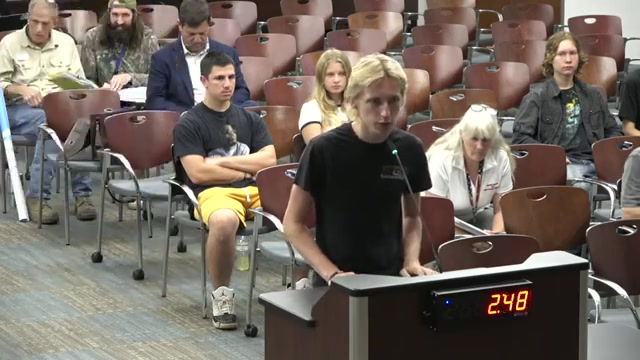
Concrete skate park; YMCA involvement could deter the target skate audience; suggested Indian Trails Park or B-section areas as alternative locations; expressed concern YMCA partnership reduces accessibility.
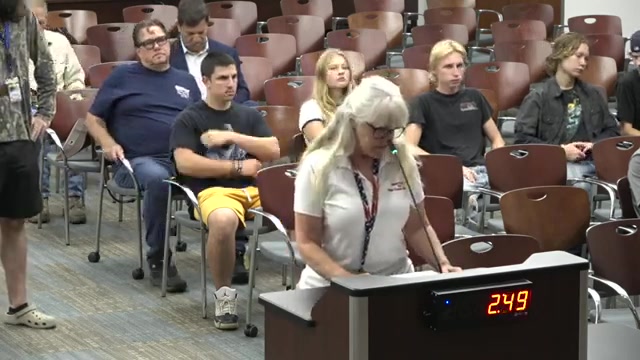
Charter language regarding District 4C vacancy and whether it was properly filled; the charter's appointment language required an election at the next regularly scheduled election which was never held; westward expansion loop road funding dispute between city and developer regarding a $126 million figure.
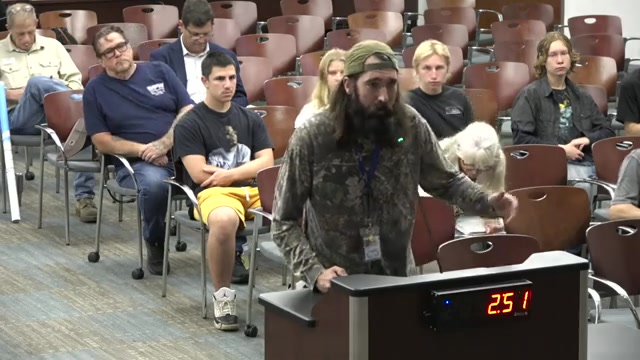
Historical preservation; presented a copy of the original ITT Palm Coast comprehensive land use plan noting provisions for monitoring and protection of significant sites by local residents and museums; discussed the Certified Local Government (CLG) designation process and the need for a historical preservation ordinance before pursuing CLG status.
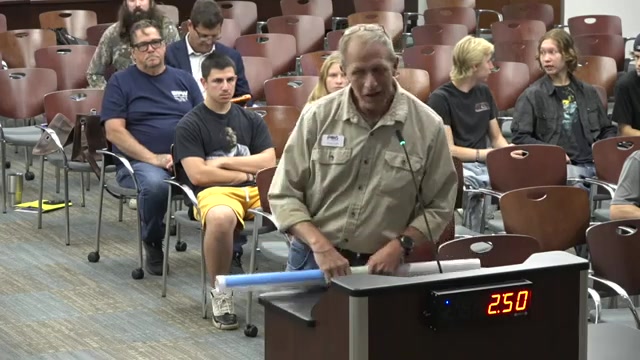
Historical preservation; as city historian, displayed a rare original map of Palm Coast showing archaeological sites; expressed support for council taking historical preservation seriously and urged a preservation ordinance before the CLG application.
Sound quality complaint; requested staff increase audio volume for audience members in the room.
Concrete skate park; as a youth pastor, noted there is little free activity for students in Palm Coast; supports a skate park as a positive community amenity.
Consultant Tara Howell of JB Pro presented a comprehensive Housing Needs Assessment commissioned by the city.
Key findings: Palm Coast housing stock is 87% single-family, over half of renters are cost-burdened, and affordability gaps will persist through 2050 particularly for households below 80% AMI.
Nine strategies were presented.
Council discussed the data, debated the appropriate role of government, and by consensus accepted strategies 1, 2, 5, 7, and 8, directing staff to return with implementation details tied to the LDC update process.
Strategies 3, 4, 6, and 9 were not advanced.
The report cost under $30,000.
Staff presented options for development of the remaining 729 duplex-zoned lots, including a pilot program and two permanent options (splitting lots for single-family homes, with or without affordable housing restrictions).
Council debated compatibility with existing neighborhoods and the viability of achieving affordability at under $315,000.
The pilot program was rejected by consensus due to legal, logistical, and preferential-treatment concerns.
On the permanent options, Vice Mayor Pontieri and Council Member Gambaro expressed openness to option 4 (affordable-restricted splitting) while Mayor Norris, Council Member Sullivan, and Council Member Miller opposed moving forward, resulting in a 3-2 consensus against proceeding.
Duplex zoned lots; expressed personal and financial opposition to splitting; splitting will not make homes affordable; compatibility with existing neighborhoods and home values must be protected; current homeowners expect elected officials to protect their investment.
Duplex zoned lots; disputes compatibility framing; argues duplex areas already mix single-family and duplex homes so new detached single-family homes are compatible; splitting lots into two homeowner-occupied properties would improve over rental duplexes; supports option 4 tied to affordability.
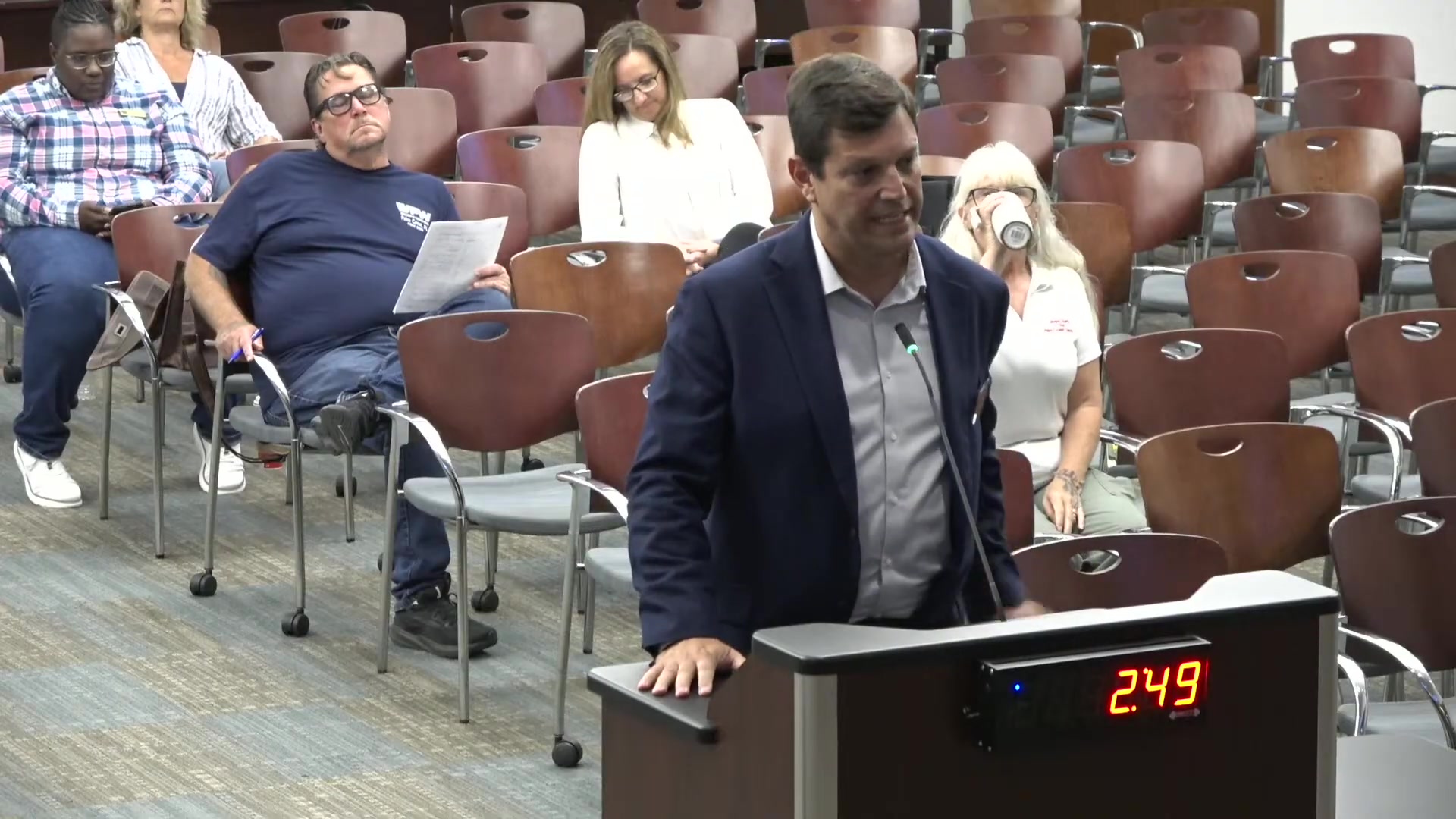
Duplex zoned lots; council's stated reasons (compatibility, lot sizes) are not the real reasons—urges council to simply say they don't like the idea; existing code already allows duplex splitting and sale as two lots; 729 remaining lots on existing infrastructure represent an underutilized affordable housing resource.
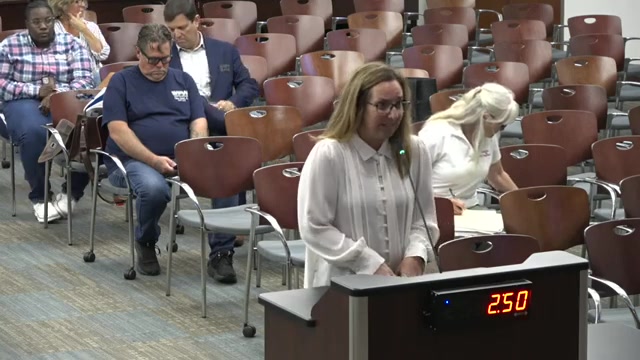
Duplex zoned lots; clarified the original concept: turning rental duplex properties into two owned single-family homes in an already-mixed area; fastest and cheapest path to affordable housing without increasing density; urges tying to affordability for police, teachers, firefighters, and downsizing seniors; warns that waiting for developers to build small lots does not guarantee affordability.
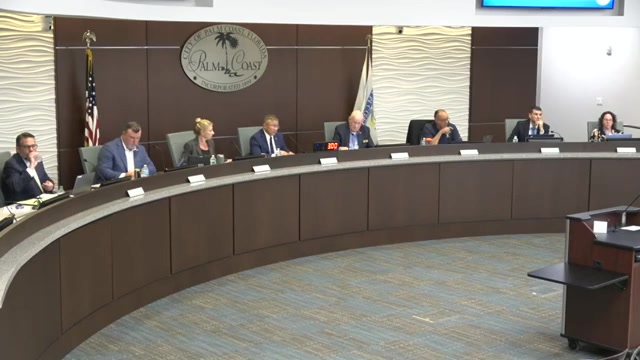
Duplex zoned lots; clarifies his original price estimate was $260,000-$290,000 based on preliminary analysis; has not committed full documentation because the discussion has been ongoing for five months without resolution.
HR Director Reina Fuller and Brown & Brown consultant Brandon Savage presented FY27 health insurance options.
Council confirmed the previously discussed direction to close enrollment to the PPO plan for new hires while grandfathering existing PPO enrollees, add an enhanced HMO plan as the new option alongside the existing HDHP, effective October 1.
Council also reviewed the MyHealth on-site clinic concept but determined the cost-benefit analysis was insufficient without a full multi-year projection comparing costs to claims savings; staff was directed to gather additional data including county experience before any decision.
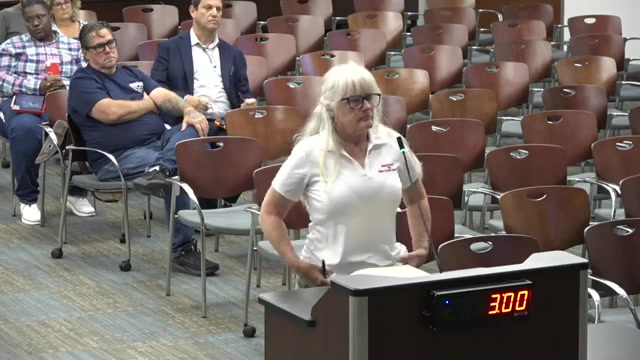
FY27 health insurance; questions why council is involved in fire department mental health services when those could be handled in-house; questions how the fire department is funded differently from the sheriff's department.
Deputy Director Lynn Stevens and Stormwater Engineer Carmelo Morales presented the annual stormwater update.
Highlights included reduction of open swale work orders from over 1,000 in October 2024 to 341 as of the meeting date, the addition of walk-behind trenching crews doubling productivity to over 55 miles of swale improvements in FY25, and ongoing capital projects including the Culbert Lane drainage improvement and Pine Grove canal dredging.
Council unanimously approved by consensus the early purchase of a pontoon excavator ($660,000) funded by unused contractor swale funds, anticipated delivery by December 2026.
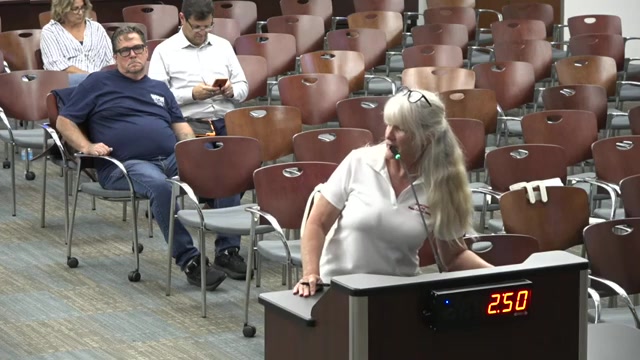
Stormwater annual update; commends the stormwater team; concerned about chemical use in waterways connecting to drinking water; urges proactive rather than reactive maintenance; recommends doubling crew and equipment capacity rather than investing in fleet maintenance.
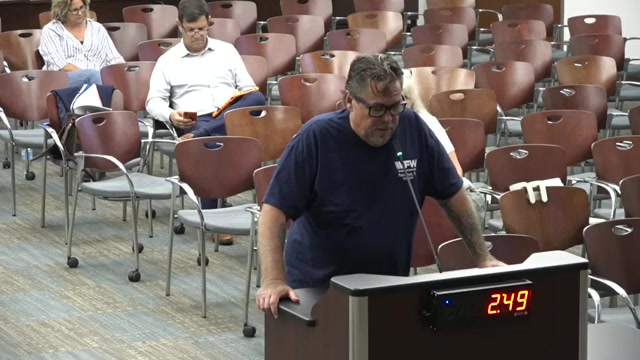
Stormwater annual update; shares experience running community canal maintenance advisory board; recommends at least 15 personnel with two excavators and dump trucks plus surveyors; notes that inaccurate grading by current equipment has in some cases created new water retention problems in front yards.
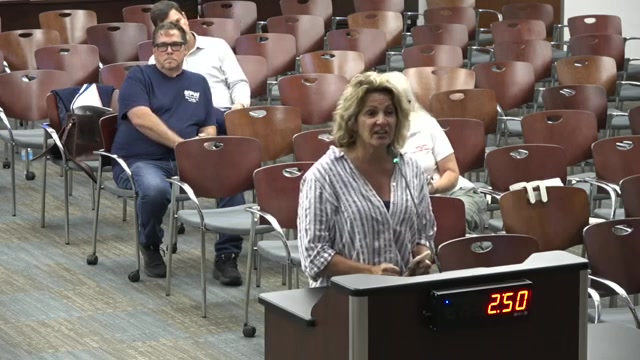
Stormwater annual update; praises K-section swale improvements; concerned that clearing wetlands and approving development at elevated grades increases flooding risk; notes that impervious surfaces drain chemicals and aviation lead into the Intracoastal without filtration; calls for county-city coordination on water quality.
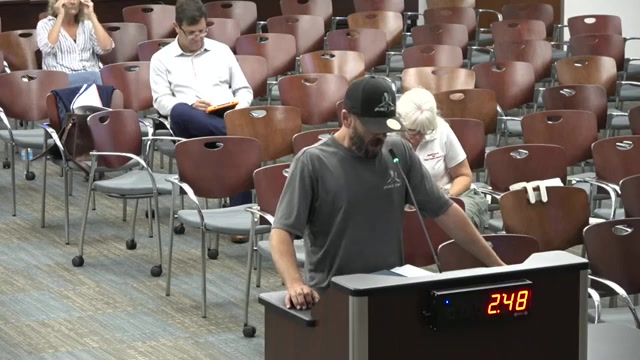
Stormwater annual update; thanks staff and field crews; his property was actively flooding during the workshop; describes storm water as a system-wide issue involving grading, runoff volume, and elevation; supports proactive infrastructure planning.
Staff engineer Carl Cody and traffic engineer Scott Kho presented the Pavement Management Program FY2026 update.
The city's overall road network PCI has declined from 79 in 2017 to 72 in the 2026 scan, with residential collectors projected to fall to a PCI of 57 under the current funding scenario.
The funding gap to maintain roads at target service levels is approximately $10 million per year against the current $2.5 million allocation.
Council discussed options A (arterials only), B (split arterial/collector), and a possible option C (maintain arterial funding plus dedicate general fund million to collectors).
Council consensus was to explore all funding mechanisms including dedicated millage, franchise fees, and other sources, with a full presentation at the June 9 budget workshop.
Pavement management; previous road maintenance showed that the millage drop since 2021 represents approximately $8.5 million per year in lost road funding; urges using existing roads data and the half-cent sales tax model as a template for dedicated road funding.
City Manager's office (presented by Chief McGlothlin and Britney Kershaw) conducted the SAP evaluation workshop.
The community surveys identified community design/growth, infrastructure/utilities, and transportation as the highest-importance/lowest-satisfaction areas.
Council reviewed all existing SAP priorities and new proposals.
Key decisions: storm water (priority 2) moved to operations; roads/pavement moved up to priority 2; economic development (priority 4, renumbered 3) retained with additions for CRA master plan, downtown core development, and private-sector engagement language; parks master plan (now priority 4) kept with added tactics for skate park exploration, deferred maintenance plan, and trail connectivity; charter review (priority 11) removed as completed; two new priorities added: feasibility of a fire service fee and development of a hazmat team; parking fees at parks rejected by consensus; grant writer/office retained as a priority.
Adopted priorities to be formalized at June 2 business meeting.
SAP evaluation; praises the process and the council-staff dialogue format; recommends adding Bunnell as a collaboration partner in the economic development tactic (4.6) given Bunnell's large land mass and industrial rezoning potential; recommends pursuing Florida Inland Navigation District (FIND) funding for saltwater canal dredging, noting Commissioner Stapleford is working to expand eligibility.
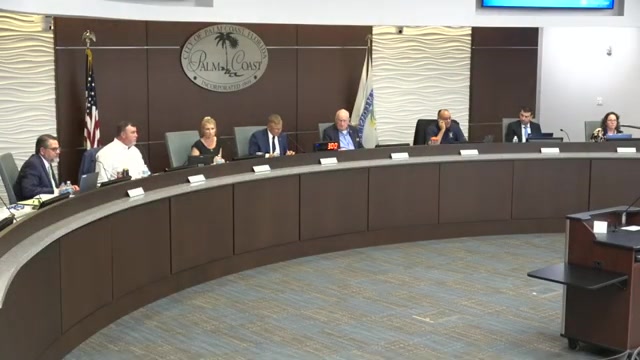
SAP evaluation; questions why the council is involved in fire department quality-of-life and mental health decisions rather than those being handled within the department's own budget.
Presentation on proposed LDC Chapter 2 amendments (Review Authority, Enforcement, and Procedures) was deferred to the June 9 workshop by consensus to manage the length of the May 12 session.
Presentation on proposed LDC Chapter 11 amendments (Tree Protection, Landscaping, Buffers, and Irrigation) was deferred to the June 9 workshop by consensus alongside E.7.
City Attorney Duffy presented proposed charter amendment language for Ordinance 2026-XX.
Two areas were workshopped: (1) Article 4 Section 7 forfeiture/suspension provisions, adding specific reference to Florida's code of ethics statute (Ch.
112) and a placeholder for any future council standard of conduct, plus a new subsection D establishing a censure-based pathway to petition the governor for removal requiring three censures within a calendar year and a supermajority vote; (2) Article 4 Section 70 vacancy filling, adding an 18-month rule requiring a special election when a vacancy occurs more than 18 months before the next regular election, with refinements to the ballot deadline guardrail subsection.
Council directed the city attorney to refine language including calling the election within 30 days and scheduling it no later than 90 days subject to the supervisor of elections' availability per statute.
Supervisor of Elections Katie Lenhard was present and provided input on scheduling constraints.
Final public comments; First Amendment rights at city council meetings; asserts his February 2025 removal from the chamber for stating he was 'emotional and shaken' was unconstitutional; cites New York Times v.
Sullivan and Cohen v.
California; argues meeting decorum rules cannot be used to suppress political criticism of elected officials.
Final public comments; submitted a charter timeline document to the city clerk documenting unapproved changes made to the Palm Coast charter in January 2019 and April 2022 without voter referendum; characterizes these changes as obstruction of justice and collusion to defraud residents; urges council to read the pre-2018 charter and compares current proposed amendments to adding more ambiguity rather than restoring original clarity.
Housing needs assessment; need to stop rising utility rates pushing aging residents from fixed incomes out of their homes; incentivize existing multi-family developers in Town Center to include affordable units for seniors wishing to downsize; preserve infill lots.
Housing needs assessment; as chair of the affordable housing advisory committee for over 25 years, described workforce housing need for people earning 50-80% AMI (max affordable housing cost ~$1,655/month); teachers living in cars; professional educators replaced by paraprofessionals; without workforce housing the city will lose essential service workers.
Housing needs assessment; agrees wages not housing supply is the real problem; questions median income figure of $89,900 citing Northeast pension transplants skewing data; warns against senior-only development model; advocates for mixed workforce and retiree communities.
Housing needs assessment; appreciated the council dialogue; supports focusing on aging community and income issues; Palm Coast was the most affordable county available when he moved; people leave because of job instability and lack of community amenities, not housing alone.
Housing needs assessment; national housing market uncertainty factors (new Fed chair, Freddie Mac restructuring, veteran affairs); cautions against financial commitments until these play out; emphasizes minimum square footage economics—toilets and AC cost the same regardless of home size.
Housing needs assessment; does not believe there is an affordability problem beyond that created by elected officials' decisions; cites available affordable units including senior apartments along Old Kings Road; argues the real issue is lack of quality jobs; questions the six-figure cost of the JB Pro report.
Housing needs assessment; market data showing 6,100 units available under $315,000; another 6,000 in queue along Old Kings Road including senior-qualifying apartments; argues city is already acting on housing tools including short-term rental ordinance, innovation kickstart utility fee program, and smaller lot approvals; urges council to tie existing tools to affordability and workforce housing.
Housing needs assessment; as chair of the AHAC, noted the committee has recommended the same strategies for years; asked on record what the study cost taxpayers; challenged council's focus on seniors to the exclusion of disabled residents and lower-income workers also identified in the report as vulnerable populations; argued in-law suites are de facto ADUs and council should stop avoiding the term.
Housing needs assessment; density, rising utility bills, insurance, and taxes are eroding affordability; questions whether increasing density actually improves affordability when monthly living costs keep rising; notes the same names appear across development interests, engineering firms, and political contributions, creating public trust concerns.